Relative sea-level rise is often discussed as a global climate signal—but in many coastal and deltaic regions, the land itself is moving faster than the sea. Understanding this distinction is critical for sound environmental planning, infrastructure design, and legal decision-making.
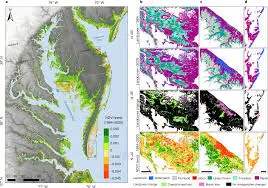
Unlike eustatic (global) sea-level rise, relative sea-level rise reflects the combined effects of ocean volume change and vertical land motion. In large river delta systems, subsidence driven by sediment compaction, fluid withdrawal, and tectonics can exceed global sea-level rise by several multiples. The result is a dramatically accelerated apparent rise in water level—one that cannot be mitigated through climate policy alone.
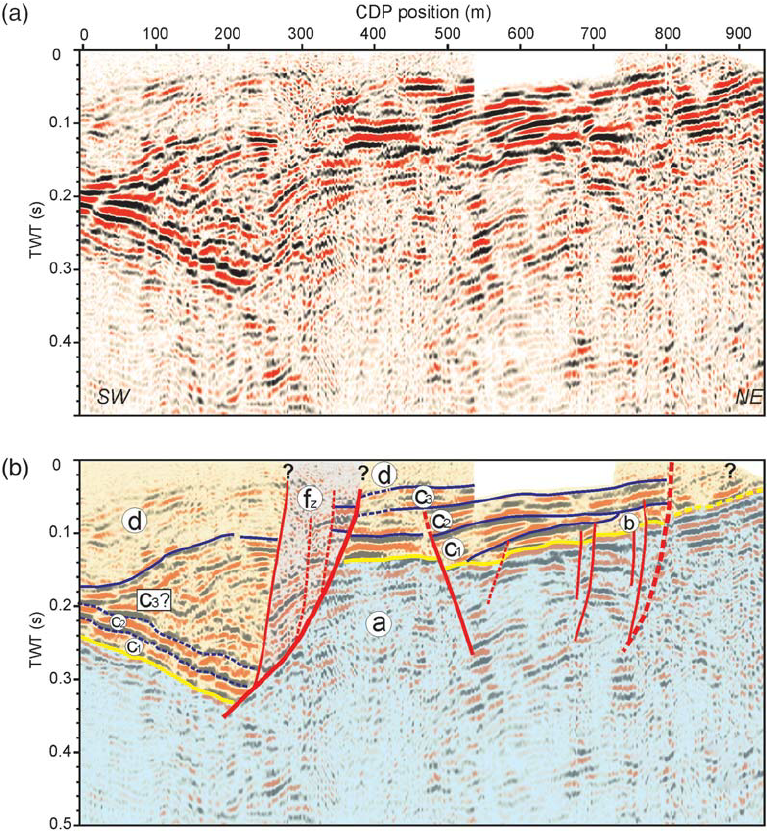
Our published research focuses on quantifying these coupled processes in deltaic environments using stratigraphic, geophysical, and geospatial datasets. By integrating sedimentological records with elevation data and subsurface structure, we can isolate the relative contributions of subsidence versus ocean rise. This distinction matters: mitigation strategies that ignore subsidence risk being ineffective or misdirected.
For example, coastal flooding models that rely solely on global sea-level projections systematically underestimate near-term risk in subsiding regions. Similarly, restoration projects designed without accounting for ongoing vertical land loss may fail prematurely, despite significant investment.
Relative sea-level rise also carries legal and regulatory implications. In environmental litigation, infrastructure disputes, and land-use planning cases, determining causation—natural versus anthropogenic, local versus global—is essential. Robust, defensible scientific analysis is often the difference between clarity and confusion in these contexts.
At Frederick Geosciences, we apply peer-reviewed methods originally developed for academic research to real-world problems. Our approach emphasizes transparency, reproducibility, and scale awareness—ensuring that conclusions drawn at one spatial or temporal scale are not improperly extrapolated to another.
The takeaway is simple but often overlooked: coastal risk is fundamentally local. Sea-level rise may be global, but its impacts are shaped by geology, stratigraphy, and human activity at the site level. Ignoring that reality leads to bad science—and worse decisions.
Questions about this topic? Contact Frederick Geosciences for a technical consultation.